
What Acquired Chooses Not to Do
After one of Acquired’s episodes came out, David Rosenthal said that a protagonist got in touch with a suggestion: make a movie instead.
I can see his point. A film could reach people who will never listen to a multi-hour English-language podcast. But it also gets at a question I kept thinking about after the Acquired x Sentry meetup in San Francisco this week: when you have a format that works, which opportunities make it stronger, and which ones just make it bigger?
I was lucky enough to spend some time with Ben and David in a smaller group before the main event on stage. They asked people where they worked, engaged seriously with questions, and seemed grateful that so many of us had spent hours with their show. That set the tone for a conversation on stage about how Acquired gets made, how it has changed, and where it might go.
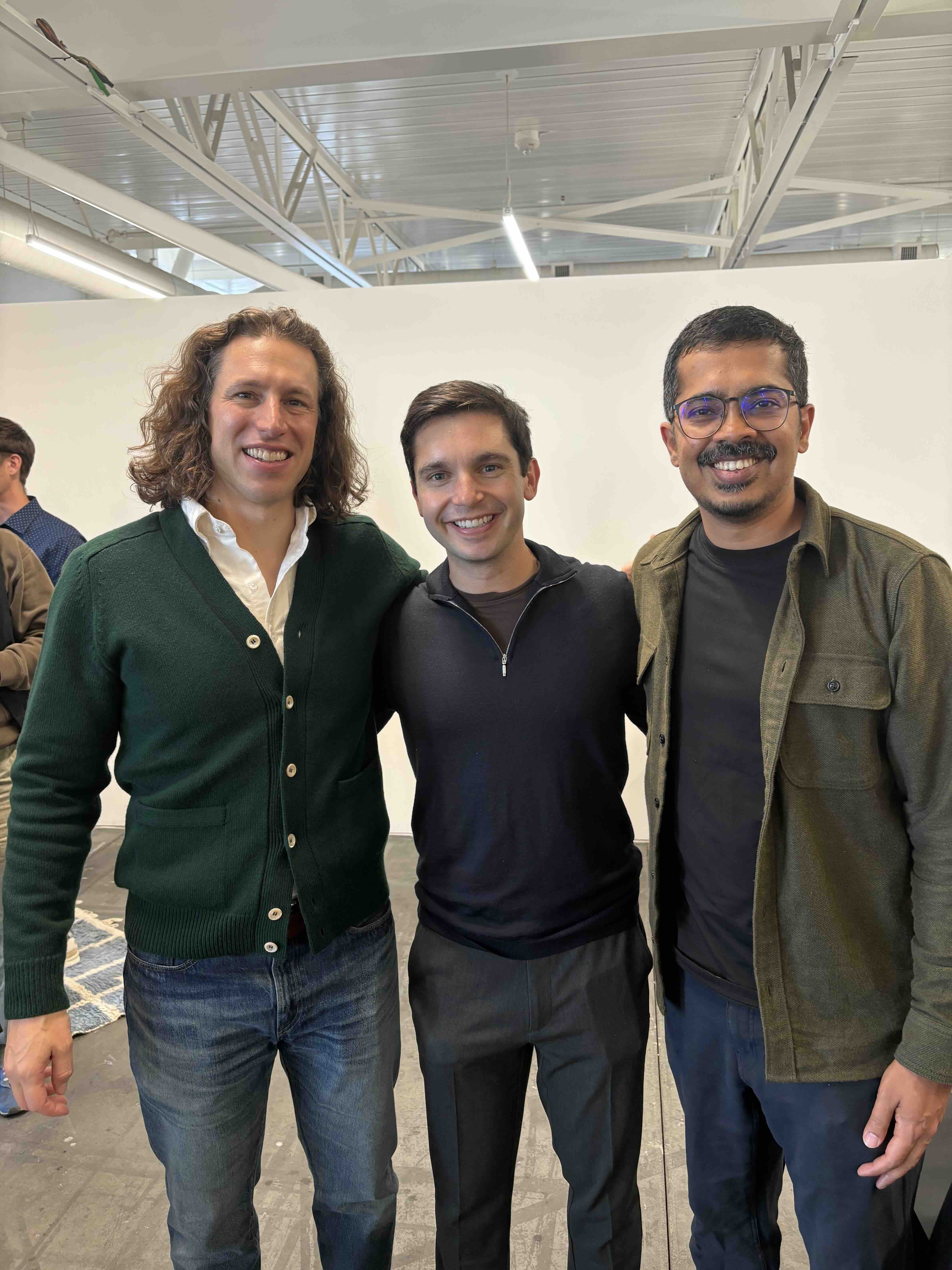
I left thinking less about podcasting advice than about the decisions behind the work, that could apply in life as well.
Be intentional, instead of starting with the obvious - they have not done Apple yet!
I asked Ben and David how they choose which companies to cover. The answer was more structured than the episodes might lead you to expect.
They said they have a backlog of roughly 400 companies, including perhaps 20 or 30 they especially want to get to. But they also think in slots. Across a season, they want some range: not ten technology companies in a row, but a mix of retail, software, healthcare, sports, and other stories. That is also an intentional audience expansion strategy. Brilliant!
The individual episodes feel like deep dives driven by curiosity. One level above that is a deliberate choice about what the show should feel like over time. I liked the tension between the two. A big backlog gives them options; the mix keeps those options from turning into repetition. Considering their ‘marriage’ of sorts - it seems like selecting one to cover is fairly easy due to their mind meld!
They take a similarly selective approach to guests. The person needs to bring something specific to the story, rather than simply be a good interview. Doug DeMuro joining them for Porsche, or Steve Ballmer, is a good example. Otherwise, Acquired risks becoming another place to hear someone tell a familiar story from the podcast circuit.
Depth and quality compound by improving the inputs
Ben talked about the amount of content available now and the question of what is actually distinctive about Acquired. The answer, as I heard it, was depth.
They want episodes that remain useful long after the news cycle has moved on. Ben described an ambition on the scale of decades: could someone return to one of these stories much later and still learn from it? I can vouch for that having been the case for a while - I first got into Acquired while preparing for product management interviews. I wanted to understand why companies made the choices they did, especially relating to acquisitions - sometimes listening to episodes a couple of years after they aired. Over the years, the episodes have grown longer, more educational and thoroughly researched, and they also produce accompanying research PDFs.
The interesting part is what that quality makes possible next. As the work improves, they gain access to founders, executives, archives, and people who were there. Those relationships don’t disappear when an episode ends. A source from one story may help with another years later.
So the work improves the inputs, and better inputs improve the work. That’s a more concrete version of compounding than simply saying, “Keep making good things and an audience will come.”
The main thing should remain the main thing.
Someone asked Ben how Acquired had changed him personally. Part of his answer was about choosing not to take every opportunity the audience has created.
They could tour more, charge for more, or build many more products around the show. Instead, the podcast remains free, advertising does much of the funding, and live events are relatively rare. Touring constantly would also be hard on their young families. From the way Ben discussed it, the decision seemed to be about protecting the show and the lives that make it possible.
That brought me back to the movie suggestion. Limitations around the reach of audio podcasts are a fair criticism. It doesn’t follow, though, that a movie would be the best next use of Ben and David’s time.
The same question comes up with short clips. Ben said they tried making more of them but found the return wasn’t especially good. Much of an Acquired episode’s value comes from context built over hours; a minute from the middle often loses that context. A chart, a surprising fact, or a sharp observation can travel on its own. A chopped-up excerpt may not.
In their ten-year anniversary conversation with Michael Lewis, David said they’d had opportunities to make TV shows, documentaries, and film adaptations. Once they dug into what those projects would require, they kept putting them in the “too hard” pile. Their usual conclusion was that their time would be better spent making another episode. Lewis, who has firsthand experience with Hollywood adaptations, agreed that these projects can consume years. They also discussed why the alternative is so valuable: Acquired’s subscribers carry over to the next story, so each new episode builds on the last. The exchange starts around 24 minutes in.
I don’t take that as a claim that Acquired should stay in one medium forever. Their Disney episode made me wonder whether other formats could someday support the podcast, the way Disney built businesses around its films. But the anniversary conversation makes the present tradeoff clearer: those formats would have to strengthen the core work without taking too much time away from it.
Ben discussed actively thinking about longterm-ism - building lasting value vs. extracting the most of it short-term. More output and more distribution might bring in more money now. They might also weaken the reason people care in the first place. It seems like Acquired has really learnt this lesson from the durable companies - Costco is the first one that comes to mind.
Rigor needs a process and a stopping point
One thing I would have liked to hear more about was what still feels painful in making the show. Ben and David clearly love the research and storytelling, but they offered a glimpse of the work behind it. At one point, recording could stretch into an exhausting eleven- or twelve-hour session. They eventually added a meeting before recording to work through the story in advance, and the recording process improved, and I have noticed that they have still kept the serendipity and back-and-forth alive.
I found that detail useful because it separates difficulty from friction. Doing the research may be hard in a way that makes the episode better. Spending twelve hours finding the shape of the story while recording may just be a process problem.
My background in research and science made me think about a related limit. With any interesting subject, there’s always one more source to read or person to interview. The question is what you need to know to tell this story responsibly, and what additional information might actually change your understanding. Once you’ve met that standard, moving on is part of taking the work seriously too. I would be curious to hear how they decide an episode is ready, going beyond just forcing functions of committed deadlines to their sponsors.
The method can travel further than the medium
The evening also pushed me to think about what Acquired’s format actually is. They have already done a Taylor Swift episode, and people brought up possibilities well beyond companies: musicians, public figures, countries, institutions. Of course, some others have taken inspiration from Acquired - The Stepchange podcast is one great example.
The common thread is not “a long podcast about a company.” It’s taking something consequential, researching the people and forces that shaped it, and telling a human story that connects history, strategy, and incentives. The podcast is only one way to do that work.
That brought me back to some ideas I’ve had for years, that I want to bring to light, but didn’t feel like I had the chops to do as a podcast. It seems to me, though, that the format doesn’t matter - it can be a podcast, but it could just as well be an explorable website, especially with today’s technology. The format is a later decision. The first obligation is to do the reporting well enough to make the story worth telling.
Acquired is a case study - not just about content, but also about the nature of work, life and passion itself: two people raising the standard of their work, improving the process behind it, and being unusually careful about what they add. And having so much fun doing it all - ‘an exercise in having our cake and eating it too’ as Ben put it.
The show has more directions it could go than ever. What seems rare is the care with which Ben and David choose the next one.