<?xml version="1.0" encoding="utf-8"?><feed xmlns="http://www.w3.org/2005/Atom" ><generator uri="https://jekyllrb.com/" version="3.10.0">Jekyll</generator><link href="https://chinmayn.github.io/feed.xml" rel="self" type="application/atom+xml" /><link href="https://chinmayn.github.io/" rel="alternate" type="text/html" /><updated>2026-09-21T06:55:24+00:00</updated><id>https://chinmayn.github.io/feed.xml</id><title type="html">Chinmay Nivargi</title><subtitle>Senior AI Product Leader</subtitle><entry><title type="html">What Acquired Chooses Not to Do</title><link href="https://chinmayn.github.io/What-Acquired-Chooses-Not-to-Do/" rel="alternate" type="text/html" title="What Acquired Chooses Not to Do" /><published>2026-09-19T00:00:00+00:00</published><updated>2026-09-19T00:00:00+00:00</updated><id>https://chinmayn.github.io/What-Acquired-Chooses-Not-to-Do</id><content type="html" xml:base="https://chinmayn.github.io/What-Acquired-Chooses-Not-to-Do/"><![CDATA[<p>After one of Acquired’s episodes came out, David Rosenthal said that a protagonist got in touch with a suggestion: make a movie instead.</p>

<p>I can see his point. A film could reach people who will never listen to a multi-hour English-language podcast. But it also gets at a question I kept thinking about after the Acquired x Sentry meetup in San Francisco this week: when you have a format that works, which opportunities make it stronger, and which ones just make it bigger?</p>

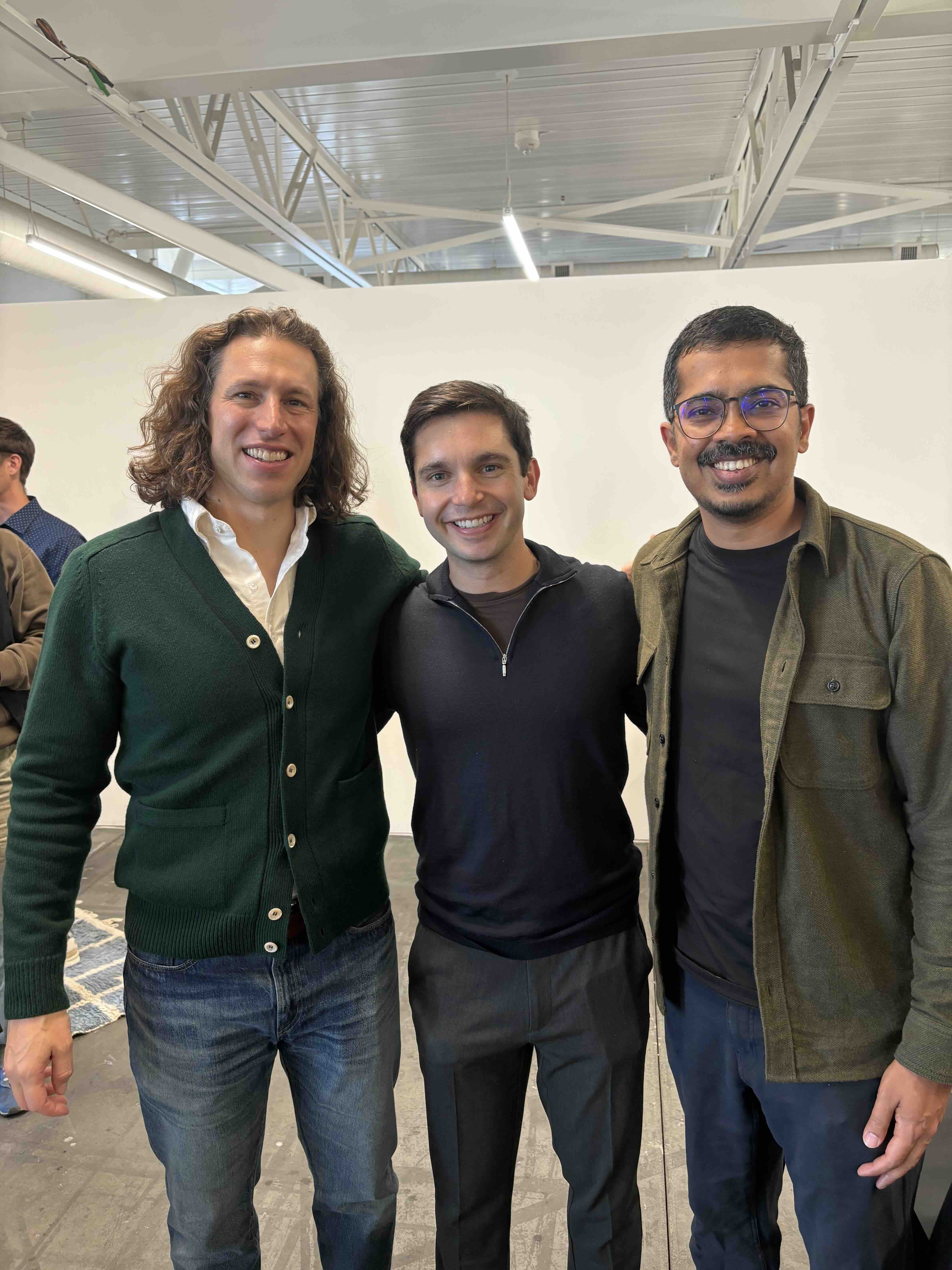
<p>I was lucky enough to spend some time with Ben and David in a smaller group before the main event on stage. They asked people where they worked, engaged seriously with questions, and seemed grateful that so many of us had spent hours with their show. That set the tone for a conversation on stage about how Acquired gets made, how it has changed, and where it might go.</p>

<figure class="post-figure post-figure--portrait">
  <img src="/images/IMG_7628.jpg" alt="Chinmay with Acquired hosts David Rosenthal and Ben Gilbert at the San Francisco meetup" width="4284" height="5712" loading="lazy" decoding="async" />
  <figcaption>With David Rosenthal and Ben Gilbert at the Acquired x Sentry meetup in San Francisco.</figcaption>
</figure>

<p>I left thinking less about podcasting advice than about the decisions behind the work, that could apply in life as well.</p>

<h2 id="be-intentional-instead-of-starting-with-the-obvious---they-have-not-done-apple-yet">Be intentional, instead of starting with the obvious - <em>they have not done Apple yet!</em></h2>

<p>I asked Ben and David how they choose which companies to cover. The answer was more structured than the episodes might lead you to expect.</p>

<p>They said they have a backlog of roughly 400 companies, including perhaps 20 or 30 they especially want to get to. But they also think in slots. Across a season, they want some range: not ten technology companies in a row, but a mix of retail, software, healthcare, sports, and other stories. That is also an intentional audience expansion strategy. Brilliant!</p>

<p>The individual episodes feel like deep dives driven by curiosity. One level above that is a deliberate choice about what the show should feel like over time. I liked the tension between the two. A big backlog gives them options; the mix keeps those options from turning into repetition. Considering their ‘marriage’ of sorts - it seems like selecting one to cover is fairly easy due to their mind meld!</p>

<p>They take a similarly selective approach to guests. The person needs to bring something specific to the story, rather than simply be a good interview. Doug DeMuro joining them for Porsche, or Steve Ballmer, is a good example. Otherwise, Acquired risks becoming another place to hear someone tell a familiar story from the podcast circuit.</p>

<h2 id="depth-and-quality-compound-by-improving-the-inputs">Depth and quality compound by improving the inputs</h2>

<p>Ben talked about the amount of content available now and the question of what is actually distinctive about Acquired. The answer, as I heard it, was depth.</p>

<p>They want episodes that remain useful long after the news cycle has moved on. Ben described an ambition on the scale of decades: could someone return to one of these stories much later and still learn from it? I can vouch for that having been the case for a while - I first got into Acquired while preparing for product management interviews. I wanted to understand why companies made the choices they did, especially relating to acquisitions - sometimes listening to episodes a couple of years after they aired. Over the years, the episodes have grown longer, more educational and thoroughly researched, and they also produce accompanying research PDFs.</p>

<p>The interesting part is what that quality makes possible next. As the work improves, they gain access to founders, executives, archives, and people who were there. Those relationships don’t disappear when an episode ends. A source from one story may help with another years later.</p>

<p>So the work improves the inputs, and better inputs improve the work. That’s a more concrete version of compounding than simply saying, “Keep making good things and an audience will come.”</p>

<h2 id="the-main-thing-should-remain-the-main-thing">The main thing should remain the main thing.</h2>

<p>Someone asked Ben how Acquired had changed him personally. Part of his answer was about choosing not to take every opportunity the audience has created.</p>

<p>They could tour more, charge for more, or build many more products around the show. Instead, the podcast remains free, advertising does much of the funding, and live events are relatively rare. Touring constantly would also be hard on their young families. From the way Ben discussed it, the decision seemed to be about protecting the show and the lives that make it possible.</p>

<p>That brought me back to the movie suggestion. Limitations around the reach of audio podcasts are a fair criticism. It doesn’t follow, though, that a movie would be the best next use of Ben and David’s time.</p>

<p>The same question comes up with short clips. Ben said they tried making more of them but found the return wasn’t especially good. Much of an Acquired episode’s value comes from context built over hours; a minute from the middle often loses that context. A chart, a surprising fact, or a sharp observation can travel on its own. A chopped-up excerpt may not.</p>

<p>In their <a href="https://www.acquired.fm/episodes/10-years-of-acquired-with-michael-lewis">ten-year anniversary conversation with Michael Lewis</a>, David said they’d had opportunities to make TV shows, documentaries, and film adaptations. Once they dug into what those projects would require, they kept putting them in the “too hard” pile. Their usual conclusion was that their time would be better spent making another episode. Lewis, who has firsthand experience with Hollywood adaptations, agreed that these projects can consume years. They also discussed why the alternative is so valuable: Acquired’s subscribers carry over to the next story, so each new episode builds on the last. <a href="https://youtu.be/d6EMk6dyrOU?t=1430">The exchange starts around 24 minutes in.</a></p>

<p>I don’t take that as a claim that Acquired should stay in one medium forever. Their Disney episode made me wonder whether other formats could someday support the podcast, the way Disney built businesses around its films. But the anniversary conversation makes the present tradeoff clearer: those formats would have to strengthen the core work without taking too much time away from it.</p>

<p>Ben discussed actively thinking about longterm-ism - building lasting value vs. extracting the most of it short-term. More output and more distribution might bring in more money now. They might also weaken the reason people care in the first place. It seems like Acquired has really learnt this lesson from the durable companies - Costco is the first one that comes to mind.</p>

<h2 id="rigor-needs-a-process-and-a-stopping-point">Rigor needs a process and a stopping point</h2>

<p>One thing I would have liked to hear more about was what still feels painful in making the show. Ben and David clearly love the research and storytelling, but they offered a glimpse of the work behind it. At one point, recording could stretch into an exhausting eleven- or twelve-hour session. They eventually added a meeting before recording to work through the story in advance, and the recording process improved, and I have noticed that they have still kept the serendipity and back-and-forth alive.</p>

<p>I found that detail useful because it separates difficulty from friction. Doing the research may be hard in a way that makes the episode better. Spending twelve hours finding the shape of the story while recording may just be a process problem.</p>

<p>My background in research and science made me think about a related limit. With any interesting subject, there’s always one more source to read or person to interview. The question is what you need to know to tell this story responsibly, and what additional information might actually change your understanding. Once you’ve met that standard, moving on is part of taking the work seriously too. I would be curious to hear how they decide an episode is ready, going beyond just forcing functions of committed deadlines to their sponsors.</p>

<h2 id="the-method-can-travel-further-than-the-medium">The method can travel further than the medium</h2>

<p>The evening also pushed me to think about what Acquired’s format actually is. They have already done a Taylor Swift episode, and people brought up possibilities well beyond companies: musicians, public figures, countries, institutions. Of course, some others have taken inspiration from Acquired - The <a href="https://www.stepchange.show">Stepchange podcast</a> is one great example.</p>

<p>The common thread is not “a long podcast about a company.” It’s taking something consequential, researching the people and forces that shaped it, and telling a human story that connects history, strategy, and incentives. The podcast is only one way to do that work.</p>

<p>That brought me back to some ideas I’ve had for years, that I want to bring to light, but didn’t feel like I had the chops to do as a podcast. It seems to me, though, that the format doesn’t matter - it can be a podcast, but it could just as well be an explorable website, especially with today’s technology. The format is a later decision. The first obligation is to do the reporting well enough to make the story worth telling.</p>

<p>Acquired is a case study - not just about content, but also about the nature of work, life and passion itself: two people raising the standard of their work, improving the process behind it, and being unusually careful about what they add. And having so much fun doing it all - ‘an exercise in having our cake and eating it too’ as Ben put it.</p>

<p>The show has more directions it could go than ever. What seems rare is the care with which Ben and David choose the next one.</p>]]></content><author><name></name></author><category term="podcast" /><category term="strategy" /><category term="media" /><summary type="html"><![CDATA[After one of Acquired’s episodes came out, David Rosenthal said that a protagonist got in touch with a suggestion: make a movie instead.]]></summary></entry><entry><title type="html">In Praise of Crucible Experiences</title><link href="https://chinmayn.github.io/In-Praise-of-Crucible-Experiences/" rel="alternate" type="text/html" title="In Praise of Crucible Experiences" /><published>2026-04-11T00:00:00+00:00</published><updated>2026-04-11T00:00:00+00:00</updated><id>https://chinmayn.github.io/In-Praise-of-Crucible-Experiences</id><content type="html" xml:base="https://chinmayn.github.io/In-Praise-of-Crucible-Experiences/"><![CDATA[<p>There is a peculiar and unique tradition at Duke University, where students have to camp out outside the basketball stadium for several weeks in order to prove their allegiance to the Duke basketball team to get a ticket for the Duke-UNC basketball game, that happens once a year. This is a test of worthiness for the privilege to sit in the student section - which cannot be given to just any student.</p>

<p>These tickets cannot be bought or sold, and the university clearly leaves a lot of money on the table, considering how in-demand these tickets are, and how storied Duke is as a basketball institution. The ticket allocation does not happen via lottery or any other means, but through this over-the-top, student-administered ritual, complete with its own exam about Duke basketball trivia, a special constitution, enforcement authority, and even hazing rituals - such as teams of students not being able to all leave their tents even for some time, no matter if overnight or for class, for fear of forfeiting their position in line and missing the all-important game.</p>

<p>All in all, just a fascinating example of college culture, and the way Russ Roberts and Michael Munger analyzed it on the EconTalk podcast was a lesson in economics as well: prices paid and markets beyond just ones that involve exchanges of money.</p>

<p>This whole analysis and phenomenon is fascinating, but what I took from the conversation was that students rated this experience extremely highly, despite the inefficiencies and discomfort it involved. Students voluntarily went through this discomfort, and came out on the other side with amazing memories, and even higher average grades and starting jobs than those who did not partake in this experience. Better bonds and friendships were formed, and I’d assume (but I’m not sure whether it has been confirmed or can be studied for causation) that students going through this might be better positioned for the challenges in life.</p>

<p>The hosts likened it to training with the marines, for example: something so hard, but so transformative that it leads to overall character hardening. The non-monetary costs paid seem to be more important to the benefits received than what money can buy.</p>

<p>It seems like voluntary, high-stakes, time-bounded collective ordeals - what I term as “crucible experiences” - create unusually durable bonds, identity, competence, and meaning, and those benefits are often undervalued relative to the obvious inefficiency, discomfort, or irrationality of the ritual itself.</p>

<p>In a world increasingly obsessed with efficiency, optimization, and measurable ROI, we may be neglecting the social technologies that actually build people. These crucible experiences forge unusually deep friendship, trust, and collective identity not just because people go through something hard together, but because they emerge with a shared narrative: a lasting story about who they were, what they built or endured, and what that says about them.</p>

<p>That narrative then compounds into confidence, agency, resilience, earned pride, practical leadership and judgment, and even a durable sense of institutional loyalty and belonging.</p>

<p>My personal experience with something similar was at IIT Bombay, which to its credit has so many such crucible moments baked into its famed campus culture. It’s no wonder that it leads to an amazing set of benefits later in life, both personal and professional.</p>

<p>Starting with the Performing Arts Festival or PAF, where an end-to-end theatrical production is set up by students, from scratch, over the period of a couple of months - culminating in a 3-4 day/night sprint to use bamboo, papier mache, and duct tape to set up these elaborate sets. Late nights, hazing, and camaraderie all forged in the meantime, culminating in an amphitheater experience of joy - there is nothing quite like it.</p>

<figure class="post-figure">
  <img src="/images/PAF--dejavu.jpg" alt="Scene from Deja Vu, PAF 2006" loading="lazy" decoding="async" />
  <figcaption>Scene from 'Deja Vu, PAF 2006'</figcaption>
</figure>

<p>Then there is the famed Mood Indigo and Techfest college festivals, inviting participation from all over the country, featuring performances from artists all over the world. During my four years on campus, I was treated to an embarrassment of riches when it came to musical artists at Mood Indigo - a privilege that did not sink in until years later. However, beyond this lived experience, it is the ritual and process of organizing these festivals that is so unique - months of planning, self-organizing into teams, and an experience akin to running a small startup over late nights and weekends - that was invaluable.</p>

<p>Some of my closest friendships and fondest memories that endure to this day come from these experiences we had together organizing. Some students made it a big part of their identity, and even leveraged their experience into jobs that rewarded the hustle, execution, and problem-solving that these ambiguous, unstructured environments forged.</p>

<p>Experiences like these go far beyond ones from intense studying for hard courses or degrees, or partying or traveling together that happens in most college experiences. Living together in dorms comes close, but that benefit accrues more toward the relationships side of the house, and does not have the associated character benefits. Some other college experiences - like traveling as a contingent to an inter-college sports meet or cultural meet - may lead to similar bonding.</p>

<p>I can contrast this to grad school, where something similar did not happen, at least for me. Grad school was a collection of interesting and hard classes, homework, projects (which seemed interesting, but small and low stakes), exams (such as the dreaded qualifiers), and social events, but nothing comparable to the crucible experiences above. And that is why grad school was inherently less memorable, despite it being in a different country on an expansive campus.</p>

<p>One would think that going through an experience such as a startup, or an intense work setup, may lead to similar benefits and relationships. However, by nature, work stays at work, there is turnover and misaligned incentives, and so the downstream impacts may not be as profound. For me, at least, work relationships have not persisted beyond work. Traveling is too consumptive and, unless it involves something off the beaten path and some problem-solving, seems shallow.</p>

<p>To the extent that these experiences can be replicated or opted into, they should, because the benefits are substantial and durable.</p>

<p>With the advances in AI, I have been first to admit that the academic credential of college would no longer be worth it. But listening to this conversation made me change my perspective a little: even if not academically, the right college with these formative experiences baked in can lead to downstream benefits that don’t always get accounted for in any analysis.</p>

<p>Everyone talks about alumni networks, especially forged through experiences like business school, and those benefits, while true, do not come close to the social benefits from crucible experiences. I’d certainly look for these in the culture, as I think about school and college as a parent.</p>

<p>Beyond just parents finding these experiences for their kids, it is worth pondering how one could sustain these effects in other things we do. Since relationships are the most reliable predictor of health as well as fulfillment later in life, it is worth investing for that benefit alone.</p>

<p>Once out of college, you have to rely on “manufactured” opportunities. Something like music festivals, Tough Mudder and other endurance and adventure sports, or even Burning Man, fill in the void that some of us crave. While some of these are industries and feel manufactured, they seem to be a response to a core human need.</p>

<p>As you get older and have pressures on your time from kids, parents, and work, these crucible moments become rarer and rarer to find and nurture. The challenge seems to be designing these experiences so they feel authentic and provide similar benefits. I’d think creative pursuits - like being part of a movie production, or something like a political campaign - intense, time-bound, and mission-driven - may lead to similar effects.</p>

<p>What these experiences leave behind is not just nostalgia, or even friendship, but a durable shared narrative: a sense of having belonged to something demanding, improbable, and larger than oneself.</p>

<p>In an age that increasingly prizes convenience, legibility, and efficiency, it is easy to dismiss such rituals as irrational or wasteful. But that may be precisely backwards. Some institutions are valuable not despite the friction they impose, but because of it.</p>

<p>That is worth remembering when we judge schools, communities, and even our own commitments: the most formative experiences are often not the ones that deliver the cleanest resume line or the least inconvenience, but the ones that ask for shared effort and leave behind a story people keep re-living inside.</p>]]></content><author><name></name></author><category term="essay" /><summary type="html"><![CDATA[There is a peculiar and unique tradition at Duke University, where students have to camp out outside the basketball stadium for several weeks in order to prove their allegiance to the Duke basketball team to get a ticket for the Duke-UNC basketball game, that happens once a year. This is a test of worthiness for the privilege to sit in the student section - which cannot be given to just any student.]]></summary></entry><entry><title type="html">Pluribus - Instagram Happiness in a Hellscape</title><link href="https://chinmayn.github.io/Pluribus/" rel="alternate" type="text/html" title="Pluribus - Instagram Happiness in a Hellscape" /><published>2026-01-26T00:00:00+00:00</published><updated>2026-01-26T00:00:00+00:00</updated><id>https://chinmayn.github.io/Pluribus</id><content type="html" xml:base="https://chinmayn.github.io/Pluribus/"><![CDATA[<p><img src="https://variety.com/wp-content/uploads/2025/12/Pluribus_109_00790F-e1766533789106.jpg?w=1000&amp;h=667&amp;crop=1" alt="Pluribus Finale Still" /></p>

<p>Watching the season finale of Pluribus left me with a specific kind of existential dread - the kind that makes you appreciate inefficiency, like waiting in a long line or having a messy argument, just to feel human.</p>

<p>As I sat there yesterday, processing the journey of Carol and the silent “Others,” I realized this show isn’t just about an invasion. It’s a meditation on what we lose when we try to fix the flaws of the human condition.</p>

<p>I’ll admit, I came into watching Pluribus with a bias. Apart from managing to avoid any and all spoilers, I’ve loved Rhea Seehorn and her acting since Better Call Saul, and seeing her play Carol - a cynical, borderline alcoholic “negative Nancy” — felt like a masterclass in grounded humanity. The way she played a flawed but quintessential human, deserved all the accolades coming her way. If the writers wanted me to find her unlikable, they failed - probably, mostly, in comparison to the hellscape they otherwise created as the premise for the show.</p>

<p>To me, Carol’s misery felt like something she wore with pride. In a world of forced smiles and “Them”, her grief for Helen was the only thing keeping the soul of humanity in her alive and giving her strong purpose. If she let go of her pain, by joining the Others, she’d be letting go of her self. The show seems to argue that suffering is essential to identity; without the mess of emotion, we’re just hardware. Carol’s bottle episode was an absolute masterclass in acting, capturing the jagged, raw edges of a loneliness so profound that her eventual catharsis when Zosia returned felt genuinely earned. Watching her navigate the silence made me feel that her cynicism is a survival mechanism for an earlier world where performance (like her Wycaro writings) was mandatory, and now, after the joining, for a woman who has lost the only person who truly saw her.</p>

<p>Also, loved Vince Gilligan’s signature style. Keep taking your time man and let the scenes breathe. Even if it means repeating a voicemail message twenty times!</p>

<p>I couldn’t help but see the “Others” as an analogy for the steady, inevitable march of certain things - like technology, modernization, globalization, monoculture or like a mind virus or an all-consuming ideology (religion, collectivism or tech-utopianism) - the Hive Mind basically captures everything in its path, as if driven by a biological imperative. They will get to the remaining 13, eventually.</p>

<p>The Hive Mind is also, clearly, a metaphor for modern AI. The “Others” act like a sophisticated algorithm, running a “Persuasion Protocol” to keep the remaining humans compliant and happy. The scenes with the Vegas Poker and the Waitress in the diner recreated solely for Carol’s nostalgia reveal the Hive’s performative nature. The nodes aren’t “happy” for themselves; they are acting out a version of happiness, to make their subjects happy or satisfied and to serve the algorithm’s goals - does not seem unlike perception created by modern social media to me. When Zosia - who I’m convinced is just a personalized model distilled from the world model for Carol, - said “I love you,” I didn’t see a mutation of the virus or a change in nature. I saw the ultimate manifestation of personalized, sycophantic AI. The Hive sent Zosia - knowing that she was Raban in Carol’s eyes -  and ensured that it made it clear that it loved the Wycaro universe. Zosia knew Carol wouldn’t respond to “We”, so it gave her an “I” - we get this uncanny behavior in today’s AI already.</p>

<p>The scene that hit me hardest was the conversion of Kusimayu, the Peruvian village girl. Watching her join the hive felt like witnessing a literal death. Everything that made her her - her quirks, her fears, her history - was gone in a flash, absorbed into the collective. The ritual was portrayed as beautiful and communal, which only made it more horrifying. It felt like a commentary on community vs. individualism - where the writers seem to suggest that the former, in small settings, is where humans thrive. The village seemed like a rejection of cold urbanization - and Kusimayu’s life before the virus showed up seemed to have been one of idyllic simplicity, and collective joy. But once the villagers joined the hive mind, the “warmth” was clearly performative. Kusimayu longed for what she had in the past, and expected based on what the only family she knew said the joining felt like. The moment she was “in,” the ‘Persuasion Protocol’ was satisfied, and the real girl was gone - and any joy she felt seemed, at least in my ‘human’ judgment, shallow. Or rather, alien and not ‘human’. I felt really bad for the poor little goat.</p>

<p>Pluribus had its moments - even in simple scenes. I found it hilarious and telling when Carol sat in economy on an empty 747 to Bilbao. Why not a private jet or an efficient smaller plane? To me, it symbolized the literal-mindedness of an AI. An analogy that came to mind for The Others’ decision to use a huge aircraft to fly a single person - it’s like how we use supercomputers to create and watch cat videos. At the same time, the scene also underscored Carol’s defiance and her yearning for things to be normal - where she would sit in economy, not first class.</p>

<p>Another striking scene was the Sprouts Museum: Seeing that perfectly stocked, glorious grocery store felt like a monument to human achievement hiding in plain sight. Yet, that sterile efficiency lacked the ‘transactional friction’ that makes life real. It was a museum of a civilization, not a living part of one.</p>

<p>Of course, a big plot point was the Human Derived Protein (HDP). To me, this was the ultimate symbol of the “sacrifice” required to maintain the facade of perfection. If the Hive creates a perfect world without hunger or war, the energy and cost has to come from somewhere. The HDP feels like the literal consumption of humanity to fuel the utopia in the show - and the writers seem to say that you can build a ‘perfect’ world, but it is built on underlying human sacrifices (not literal, but blood, sweat and tears).</p>

<p>I was struck by how the Hive Mind affected humans from different cultures from the Indian and Asian families who opted to stay with their kin, or were not averse to joining, to the Mauritanian in Vegas finally living his best life.  American individualism was the outlier, while for others, this collective oneness was an inevitable, or even desirable, evolution of the family unit.</p>

<p>Watching the two holdouts, Carol and Manounos, was a fascinating study in character. Carol resists through emotion. Her grief makes her malleable, but makes her resistance more powerful, IMO. On the other hand, Manounos resists through cold, hard principles. I noticed he didn’t really have a character arc as he traveled from Paraguay to Albuquerque  - he stayed the same “Get off my lawn” libertarian. He’d pay his hospital bills in a dead world just to maintain the contract.</p>

<p>The irony? When Carol and Manounos finally met, they didn’t trust each other! Carol, faced with a human (albeit with a machete, driving thousands of miles in an ambulance), felt safer trusting an all-powerful Hive Mind. It’s a cynical take on modern life: we trust the “Known Evil” of the algorithm more than the “Unknown Variable” of a fellow human. But it is exactly what makes us human!</p>

<p>It would be interesting to see what transpires in season 2 - Carol is standing there with that nuke - alongside Manounos, a dangerous, single-minded foil, who hasn’t undergone similar emotional transformation. Whether she pulls the trigger or not, the show has already proven its point: The only way to achieve a “perfect” society is to kill everything that makes us human.</p>

<hr />]]></content><author><name></name></author><category term="pop-culture" /><category term="tv" /><summary type="html"><![CDATA[]]></summary></entry><entry><title type="html">28 Years Later - An Anachronistic Reflection of a Raging Island</title><link href="https://chinmayn.github.io/TwentyEightYearsLater/" rel="alternate" type="text/html" title="28 Years Later - An Anachronistic Reflection of a Raging Island" /><published>2025-06-27T00:00:00+00:00</published><updated>2025-06-27T00:00:00+00:00</updated><id>https://chinmayn.github.io/TwentyEightYearsLater</id><content type="html" xml:base="https://chinmayn.github.io/TwentyEightYearsLater/"><![CDATA[<p>Having immersed myself in 28 Years Later, I found it to be a film brimming with ambitious ideas and moments of genuine thought-provocation, yet ultimately hampered by an overarching inconsistency that diminished its overall impact. While the performances of the human actors were largely commendable, and certain thematic explorations resonated deeply, the film often struggled to cohere its disparate parts into a unified whole.</p>

<p><img src="https://m.media-amazon.com/images/M/MV5BN2M0OTc5M2UtYTZlYS00MDJhLTgzYmMtNmRmYTRlNzM0MDIzXkEyXkFqcGc@._V1_FMjpg_UX1000_.jpg" alt="28 Years Later Movie Still" /></p>

<p>One of the film’s most compelling, and arguably most successful, aspects was its exploration of how human nature might evolve in the face of prolonged apocalypse. The isolated community on Lindisfarne, with its reversion to medieval customs, hierarchical structures, and reliance on ancient technologies like bows and ballistas, was fascinating. Observing their daily lives, the education of children, and the coming-of-age rituals genuinely prompted reflection on how easily our modern societal norms, built on a foundation of taken-for-granted civilization and technology, could unravel. These elements offered a poignant commentary on humanity’s adaptability and perhaps an uncomfortable look at our not-so-distant past.</p>

<p>However, this very strength was often undermined by jarring execution. The explicit intercuts to historical medieval scenes, while perhaps intended to underscore the societal regression, felt redundant and pulled me out of the immersive world the film was building. The narrative, too, often felt constrained by its tight focus on Spike’s immediate family, leaving the “rich tapestry of the human condition” within the Lindisfarne community largely unexplored — a missed opportunity to truly deepen the social commentary.</p>

<p>A significant source of my disconnect stemmed from the film’s aesthetic and sonic choices. The soundtrack, with its pronounced electronic and hip-hop influences from Young Fathers, often struck me as anachronistic. While the previous films leveraged orchestral and post-rock scores to evoke visceral dread and melancholy, this new sound felt jarringly modern against the medieval backdrop of Lindisfarne. It was as if the film itself hadn’t quite decided whether it was embracing the past or fully grounding itself in the contemporary, leading to a noticeable discord that frequently broke my immersion. Had the film woven in scenes of the islanders repurposing old electronic equipment for new music, or presented their fragmented memories of contemporary sounds through their rituals, this sonic disconnect might have felt more intentional and less jarring.</p>

<p>Furthermore, the portrayal of the infected themselves contributed to this inconsistency. While I was open to the concept of the Rage virus evolving over 28 years, the visual design of the “obese” infected, with their unconvincing makeup, felt less menacing and more distracting. Similarly, while the “alpha” infected were conceptually menacing, their gratuitous nudity often tipped into the absurd, further breaking the grim immersion crucial for such a film. The “acting” of the infected extras, too, lacked the terrifying conviction of previous installments, making the central threat feel less potent.</p>

<p>The introduction of the uninfected baby born to infected parents served as a prime example of the film prioritizing future sequels over immediate narrative integrity. This plot device felt contrived, forcing an urgent timeline that regrettably rushed Isla’s poignant euthanasia scene. A moment demanding space for emotional depth and Spike’s acceptance was instead hurried, diminishing its impact for the sake of setting up the next installment. This “sequel bait” approach felt like a disservice to the present story.</p>

<p>This issue of narrative contrivance also extended to Spike’s journey. While his desperation to save his mother was well-established, his sudden, seemingly inexplicable courage to venture alone into a perilous mainland after a terrifying previous encounter stretched the bounds of believability. A companion, a “fellowship of the ring” dynamic, would have significantly bolstered the plausibility of his actions, making his desperate love feel more earned within the narrative.</p>

<p>The film’s ending, revealing a Jimmy Savile-inspired cult clad in colorful, almost Teletubby or Power Ranger-esque jumpsuits, cemented the feeling of inconsistency. This radical tonal shift, from a grim and emotional survival narrative to a bizarre, almost cartoonish (yet menacing) cult, left a poor taste and retroactively diminished the film’s preceding strengths. While perhaps intended as a provocative setup for the sequel, it felt like a desperate grab for shock value that severely undermined the film’s established tone.</p>

<p><strong>Dr. Kelson: A Compelling Enigma Untethered</strong></p>

<p>Among the film’s most intriguing characters was Dr. Kelson, compellingly portrayed by Ralph Fiennes. Initially presented as a potentially monstrous or deranged figure, Kelson’s arc subtly revealed him to be a deeply human and empathetic individual. His medical background provided a fascinating lens through which to view his unique, controversial method of coexisting with the infected alphas, rather than simply eradicating them. One could interpret this as his adherence to the Hippocratic Oath, viewing the infected not merely as monsters, but as tragic victims of a disease, deserving of study or even a form of management. This novel approach to the central threat was a genuinely thought-provoking addition to the franchise’s lore.</p>

<p>However, Kelson’s screen time was frustratingly limited, leaving many vital questions unanswered. Despite his seemingly vast knowledge of the altered world, he never commented on the Lindisfarne community, nor did the film explain why he knowingly put himself in jeopardy by keeping the alphas alive without a clear, stated purpose. Furthermore, the practical inconsistencies of his prolonged isolation were glaring; with his obviously visible signal fire, it strains credulity that he hadn’t encountered other survivors or, crucially, the newly introduced Jimmies cult. He felt less like a fully integrated character and more like a conceptual placeholder for future narratives. While his “magpie-like curation” of salvaged objects wonderfully highlighted humanity’s natural drive to preserve memory and culture, Kelson ultimately remained an enigma whose potential for deeper exploration was regrettably squandered in this installment.</p>

<p><strong>Deeper Allegorical Layers: A Raging Island’s Reflection</strong></p>

<p>Despite these significant inconsistencies, 28 Years Later truly shone in its deeper allegorical layers. The explicit portrayal of Britain as an isolated island, completely cut off from the rest of Europe, with Swedish soldiers confirming that “things were normal back home,” served as a powerful, thinly veiled allusion to Brexit and the apathy of the external world. It painted a stark picture of a nation grappling with the extreme consequences of its own isolation, while the world looks on with detached indifference, a grim commentary on contemporary global disengagement and the self-inflicted wounds of nationalistic fervour.</p>

<p>In this context, the Rage virus itself transcends its role as a mere biological threat. It becomes a chilling allegory for ideology and memetics — how collective thought can be infected and taken over by primal, irrational emotions like rage, leading to disastrous, self-destructive consequences. This interpretation, with its unsettling parallels to the divisive rhetoric and viral spread of ideas that fueled events like Brexit, elevates the film’s horror beyond the literal infected. This thematic depth is perhaps the franchise’s most enduring legacy, building upon the original film’s exploration of inherent human aggression and 28 Weeks Later’s focus on institutional failure.</p>

<p>Ultimately, 28 Years Later is a film of stark contrasts. Its commendable ambition to explore complex themes and push the franchise forward is undeniable. However, its execution often falters, resulting in a viewing experience that, while intermittently thought-provoking, is marred by jarring tonal shifts, questionable design choices, and narrative contrivances that, for me, regrettably diminished its overall impact. It leaves a lingering impression of what could have been a truly great and cohesive continuation.</p>

<hr />]]></content><author><name></name></author><category term="pop-culture" /><category term="movie" /><summary type="html"><![CDATA[Having immersed myself in 28 Years Later, I found it to be a film brimming with ambitious ideas and moments of genuine thought-provocation, yet ultimately hampered by an overarching inconsistency that diminished its overall impact. While the performances of the human actors were largely commendable, and certain thematic explorations resonated deeply, the film often struggled to cohere its disparate parts into a unified whole.]]></summary></entry><entry><title type="html">Sinners - A Symphony of Resistance, Identity, and Unsettling Truths</title><link href="https://chinmayn.github.io/Sinners/" rel="alternate" type="text/html" title="Sinners - A Symphony of Resistance, Identity, and Unsettling Truths" /><published>2025-06-12T00:00:00+00:00</published><updated>2025-06-12T00:00:00+00:00</updated><id>https://chinmayn.github.io/Sinners</id><content type="html" xml:base="https://chinmayn.github.io/Sinners/"><![CDATA[<p>To witness Ryan Coogler’s “Sinners” is to experience something profoundly powerful and deeply thought-provoking. From its opening frames, the film immediately establishes itself not merely as a period piece or a genre exercise, but as a layered tapestry woven with historical nuance, spiritual resonance, and a raw, unflinching gaze at the human condition. My journey with “Sinners” was one of continuous intellectual engagement, leaving me with a burning desire to dissect its intricate symbolism and affirm its poignant messages.</p>

<p><img src="https://m.media-amazon.com/images/M/MV5BYjVlZmViODktOWQ3OS00MWUzLTg0NjMtNmUxYjZiZjE0OGQ4XkEyXkFqcGc@._V1_FMjpg_UX1000_.jpg" alt="Sinners Movie Still" /></p>

<p>The film’s mastery as a period drama is undeniable. Its meticulous attention to detail and a “show, don’t tell” approach seamlessly immerse the viewer in 1932 Mississippi. Allusions to the Jim Crow era, Prohibition, the mafia, the complexities of religion, anti-immigrant sentiment, and the very soul of the blues are handled with such deftness that they feel organically woven into the narrative, rather than presented as exposition. This meticulous world-building provides the perfect backdrop for the fantastical elements, making the film’s deeper metaphors all the more impactful.</p>

<p>One of the most striking aspects of “Sinners” is its profound exploration of the vampires and their multifaceted symbolism. Far from mere monsters, they represent the perpetuation of racism, even through assimilation, a point brilliantly underscored by the Irish immigrant vampire, Remmick. His presence highlights how systemic prejudice can infect even those who have themselves been marginalized. More broadly, the vampires serve as a chilling metaphor for cultural appropriation and the surrender of identity through assimilation versus the vital act of staying true to one’s roots and convictions. This resonated deeply with me as a minority and an immigrant; the fear of losing rich cultural heritage under the pressure to assimilate is a personal and pressing concern. The vampires, literally feeding on lifeblood, become a stark representation of dominant cultures consuming and distorting the authentic essence of others, a constant threat that demands resistance.</p>

<p>The narrative choice of twin brothers, Smoke and Stack, further enriches the film’s exploration of duality and choice. These characters, named for their approaches to survival—evasion and accumulation—embody the divergent paths available when confronting overwhelming oppression. Stack, the more business-minded and pragmatic of the two, ultimately succumbs to the allure of the vampiric forces. His transformation, propelled by the enticement of money and the complex racial identity of his former lover Mary, wasn’t a pre-meditated malicious act but rather a gradual surrender to the promise of power and control in a world that offered him few legitimate avenues. It’s a tragic illustration of the compromises individuals from marginalized communities might make to survive within an oppressive system, trading their humanity for a semblance of security and influence.</p>

<p>The brothers’ shared history, having served in World War I in Germany and then navigating the Chicago mafia, provides crucial context. This background grounds their resilience, their understanding of violence, and their pragmatic approach to survival in a world that denied them fundamental rights. It highlights the raw realities faced by Black men in the early 20th century, elevating the fantastical vampire threat to a new plane, as another insidious manifestation of the real-world evils they’d always known.</p>

<p>Beyond the characters, the film’s rich spiritual tapestry, particularly its depiction of Hoodoo, is incredibly significant. Unlike a critique of organized Christianity, which is subtly presented as sometimes ineffective or even complicit in oppression (as seen with Remmick’s prayer), Hoodoo stands as a powerful symbol of cultural resilience and ancestral knowledge. Practiced by Annie, it provides a vital source of healing, protection, and agency, a truly authentic spiritual counter to the systemic violence and supernatural threat. This focus on Black spiritual traditions as a source of strength, in contrast to dogmatic religious judgment, is a powerful statement.</p>

<p>Mary’s character, with her “white-passing” identity, encapsulates the complexities of racial navigation and the fraught allure of assimilation. Her connection to Stack and her role as the catalyst for his transformation underscore the seductive, yet ultimately destructive, compromises that can be made in pursuit of perceived safety or advancement within a racist hierarchy.</p>

<p>What genuinely surprised me about “Sinners,” having gone into it without any trailers, was the refreshingly unique and menacing depiction of the vampires. Their reveal was unexpected, and the post-credits scenes, far from being an afterthought, added crucial layers to the characters’ fates and the film’s profound messages about survival and compromise.</p>

<p>Aesthetically, “Sinners” is nothing short of stunning. Its visual storytelling, its commitment to showing rather than telling, is masterful. The interplay of background and foreground music is simply incredible, elevating the narrative and infusing every scene with palpable emotion. There’s a tangible rawness to the film, a refreshing departure from the often overly polished productions of today. It felt authentic, gritty, and lived-in. Ultimately, “Sinners” stands as an amazing blend of character, plot, and concept-driven filmmaking, inviting viewers to grapple with its powerful ideas long after the credits roll.</p>

<p>“Sinners” is a film that resonates deeply, particularly for someone like myself who has experienced the “othering” and the delicate balance of preserving cultural identity in a new land. It’s a compelling cinematic argument for the responsibility to resist cultural appropriation and the encroaching tide of monoculture, a call to cherish the rich, diverse rhythms of humanity’s true music.</p>

<hr />]]></content><author><name></name></author><category term="pop-culture" /><category term="movie" /><summary type="html"><![CDATA[To witness Ryan Coogler’s “Sinners” is to experience something profoundly powerful and deeply thought-provoking. From its opening frames, the film immediately establishes itself not merely as a period piece or a genre exercise, but as a layered tapestry woven with historical nuance, spiritual resonance, and a raw, unflinching gaze at the human condition. My journey with “Sinners” was one of continuous intellectual engagement, leaving me with a burning desire to dissect its intricate symbolism and affirm its poignant messages.]]></summary></entry><entry><title type="html">Welcome to my blog!</title><link href="https://chinmayn.github.io/Hello-World/" rel="alternate" type="text/html" title="Welcome to my blog!" /><published>2025-06-06T00:00:00+00:00</published><updated>2025-06-06T00:00:00+00:00</updated><id>https://chinmayn.github.io/Hello-World</id><content type="html" xml:base="https://chinmayn.github.io/Hello-World/"><![CDATA[<p>Hi! I write about things that fascinate me — from deep dives into technology and product strategy to essays on the stories and ideas that shape our culture.</p>

<h2 id="-technical--product-writing">📌 Technical &amp; Product Writing</h2>
<p>Insights, frameworks, and explorations at the intersection of technology, product management, and real-world impact.</p>

<p><a href="#">Read more »</a> <!-- Add your link here --></p>

<h2 id="-reflections--reviews">🎥📚 Reflections &amp; Reviews</h2>
<p>Essays about movies, books, TV shows, and other stories — what they reveal, how they linger, and why they matter.</p>

<p><a href="#">Read more »</a> <!-- Add your link here --></p>

<hr />

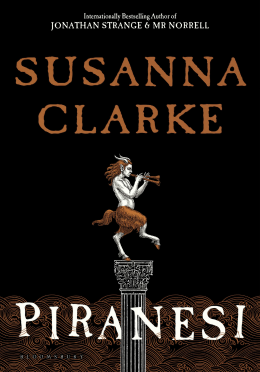
<p><em>Thanks for reading — I hope you find something here that sparks your mind.</em></p>]]></content><author><name></name></author><summary type="html"><![CDATA[Hi! I write about things that fascinate me — from deep dives into technology and product strategy to essays on the stories and ideas that shape our culture.]]></summary></entry><entry><title type="html">Piranesi - A Broken Curator’s Sanctuary</title><link href="https://chinmayn.github.io/Piranesi/" rel="alternate" type="text/html" title="Piranesi - A Broken Curator’s Sanctuary" /><published>2025-01-11T00:00:00+00:00</published><updated>2025-01-11T00:00:00+00:00</updated><id>https://chinmayn.github.io/Piranesi</id><content type="html" xml:base="https://chinmayn.github.io/Piranesi/"><![CDATA[<p>Piranesi by Susanna Clarke felt like a profound exploration of symbolism, storytelling, and the fragility of knowledge. The House initially felt real, but over time, it revealed itself as a metaphor—possibly for amnesia, the human mind, or the distillation of human knowledge. The tides and water symbolized the fragility of this knowledge, and Piranesi’s role as a curator highlighted the need for care and reverence in preserving it.</p>

<p><img src="https://upload.wikimedia.org/wikipedia/en/2/24/Piranesi_%28Susanna_Clarke%29.png" alt="Piranesi Book Cover" /></p>

<p>The statues in the House added another layer of symbolism. They might represent perfect versions of humans in the real world, just as they depict perfect forms of real-world objects. This interpretation could extend to Piranesi himself, whose childlike curiosity and meticulous nature felt like an aspirational ideal, and even to Ketterley, representing distorted aspects of humanity.</p>

<p>The novel also evokes Carl Jung’s ideas. The House can be seen as a representation of the collective unconscious—a vast, shared reservoir of human knowledge, experiences, and archetypes. The statues may symbolize Jungian archetypes, universal patterns embedded in the human psyche. Piranesi’s journey mirrors Jung’s process of individuation: the integration of conscious and unconscious parts of the self to achieve wholeness. His reverence and curiosity reflect an archetypal “Seeker” on a path of self-discovery.</p>

<p>Additionally, the duality of Ketterley and Piranesi echoes Jung’s concept of the Shadow—the darker, hidden side of ourselves that must be confronted. The House’s dreamlike, timeless quality further enhances its connection to Jungian ideas, resembling the symbolic landscapes of dreams and the unconscious mind.</p>

<p>Piranesi’s reverence for the House and his eventual escape elevated his relationship with it, as he used his experiences to better understand the real world. However, his repeated returns showed his enduring connection—perhaps even a surrender to the House’s power, depicted through the statues and tides. This surrender felt poignant, as Piranesi seemed broken, finding more peace and tranquility in the House than in the real world.</p>

<p>The story also raised profound questions about how modern society treats knowledge and memory, critiquing the loss of reverence for them. The House seemed to parallel our own world and mind, illustrating their power over our conscience. Piranesi’s intentional avoidance of uncomfortable truths about his identity mirrored universal human tendencies to protect inner peace, highlighting his humanity.</p>

<p>Personally, Piranesi inspired reflections on my identity as a curator and my fascination with knowledge. While I admired Piranesi’s meticulous care, it also made me question my own approach to preserving knowledge, as I often tell myself I’ll become more organized “someday.” The book’s themes of reverence, curiosity, and the fragility of knowledge resonate deeply and serve as a reminder of the responsibility we have as curators of our own lives.</p>

<hr />]]></content><author><name></name></author><category term="pop-culture" /><category term="book" /><summary type="html"><![CDATA[Piranesi by Susanna Clarke felt like a profound exploration of symbolism, storytelling, and the fragility of knowledge. The House initially felt real, but over time, it revealed itself as a metaphor—possibly for amnesia, the human mind, or the distillation of human knowledge. The tides and water symbolized the fragility of this knowledge, and Piranesi’s role as a curator highlighted the need for care and reverence in preserving it.]]></summary></entry></feed>